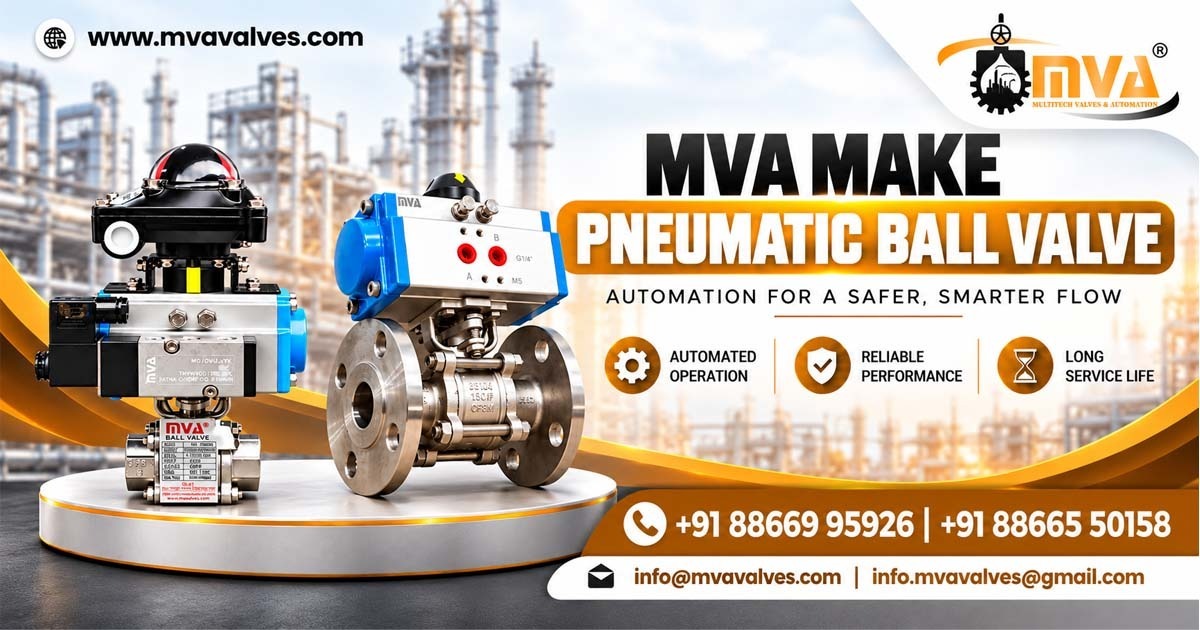
A pneumatic ball valve must do more than open and close a pipeline. For industrial buyers in Mexico, selecting the correct valve-and-actuator combination requires checking fluid compatibility, operating pressure, temperature, required torque, and the response needed when compressed air fails.
1. Why Valve and Actuator Selection Must Be Evaluated Together
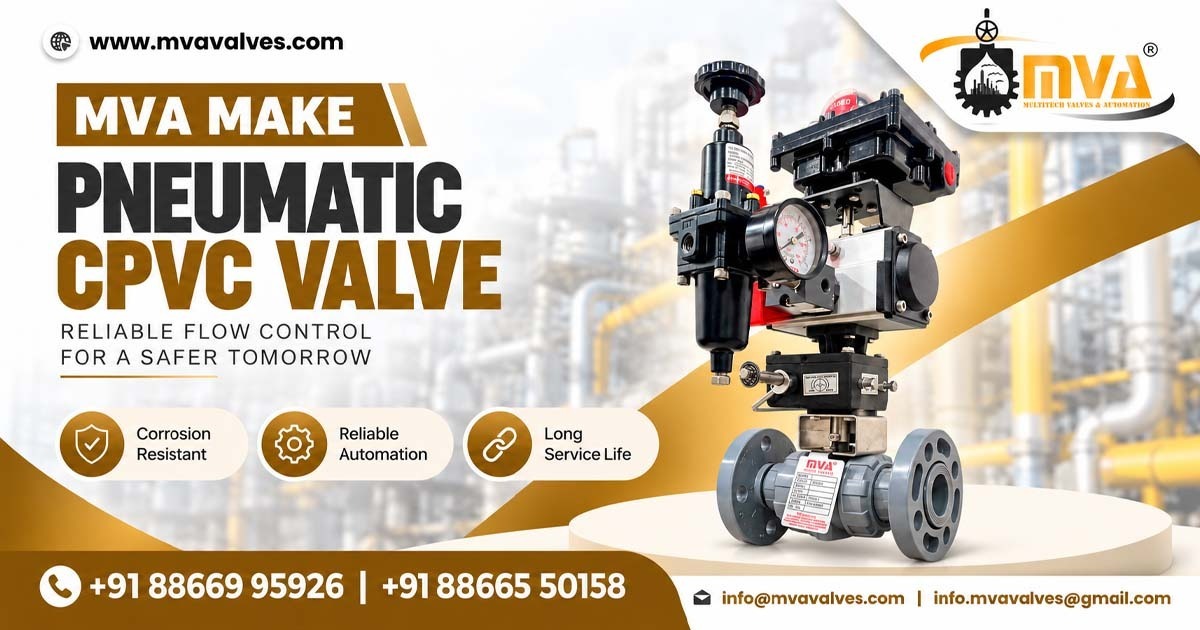
A pneumatic ball valve uses compressed air to rotate a ball inside the valve body, opening or closing the flow path. It is commonly considered for automated isolation in process pipelines where manual operation is inconvenient or frequent switching is required.
When evaluating a Pneumatic Ball Valve Supplier In Mexico, buyers should assess the complete assembly rather than choosing a valve and actuator independently.
Three elements need to work together:
– Valve body and ball: Must suit the process fluid, pressure, and temperature.
– Seats and seals: Must be compatible with the fluid and the required leakage performance.
– Pneumatic actuator: Must provide sufficient operating torque at the available air pressure.
A mismatch in any of these areas can affect reliable operation, even when the individual components appear suitable.
2. Which Operating Conditions Can Change the Selection?
The most important selection decision is how the valve will perform under actual operating conditions, not merely its nominal pipe size.
| Operating condition | What buyers should verify |
| Fluid composition | Chemical compatibility of the body, ball, seats, and seals |
| Working pressure | Valve pressure rating and maximum differential pressure |
| Operating temperature | Temperature limits of all wetted materials and seals |
| Flow requirement | Port configuration, bore size, and pressure drop |
| Switching frequency | Actuator suitability for the expected operating cycle |
| Compressed air supply | Available pressure, air quality, and actuator requirements |
Technical insight: Actuator torque requirements can increase with differential pressure, seat friction, fluid conditions, and valve design. An actuator selected only by nominal valve diameter may therefore be undersized.
Ask the supplier to confirm the required torque against the valve’s operating conditions and the actuator’s available torque at the actual air supply pressure.
3. Single-Acting or Double-Acting: Which Is Appropriate?
These configurations affect how the valve moves and what happens if the air supply is interrupted.
– Single-acting actuator: Uses compressed air for movement in one direction and a spring for return. Depending on its design, it can be configured for a fail-open or fail-closed position.
– Double-acting actuator: Uses compressed air for both opening and closing movements. Its response to air failure depends on the wider system design and any additional fail-safe provisions.
The correct choice depends on the process risk and control philosophy. For example, a chemical transfer line may require a defined safe position during an interruption, while another application may prioritize controlled isolation during routine production.
Buyers should confirm the intended failure position, available instrumentation, and any additional safety requirements before approving the configuration.
4. What Should Buyers Check Before Approving a Quotation?
A quotation should make it possible for procurement and engineering teams to verify that the offered valve matches the application.
Review these details before placing an order:
– Connection standard: Confirm threaded, flanged, or other required end connections and their compatibility with the existing pipeline.
– Material specification: Check the body, ball, seat, and seal materials against the actual fluid and operating temperature.
– Actuator interface: Verify the mounting arrangement and mechanical compatibility between the valve and actuator.
– Control requirements: Identify whether the system needs simple open-close operation, position feedback, solenoid control, or proportional control.
– Documentation: Request the applicable datasheet, pressure-temperature limits, actuator details, and inspection or test records.
For cross-border procurement into Mexico, also clarify the delivery destination, packaging, shipping arrangements, applicable import documentation, and responsibility for customs clearance.
5. How Automation Requirements Affect the Complete Assembly
A pneumatic ball valve can operate as part of a wider automated process. However, the valve itself does not automatically provide every control function a plant may need.
For example, a basic on-off arrangement opens or closes the flow path. If a production process needs continuous adjustment of flow, buyers should confirm whether a suitable modulating valve configuration and compatible control system are required.
Depending on the application, the assembly may need:
– A solenoid valve to direct compressed air to the actuator.
– Limit switches or position indicators to report the valve position.
– An air filter-regulator arrangement where required by the actuator manufacturer.
– A suitable control interface for the plant’s PLC or automation panel.
These accessories should be specified according to the control system design rather than added without a defined purpose.
6. A Practical Procurement Scenario for Mexican Industry
Consider a hypothetical manufacturing plant in Monterrey that wants to automate a valve on a chemical transfer line.
The purchasing team initially compares quotations by valve size and price. During technical review, the engineering team identifies the need to check chemical compatibility, operating temperature, maximum differential pressure, actuator torque, and the desired valve position following air failure.
The team then asks each supplier to confirm the same technical requirements and provide comparable documentation.
This approach makes the quotations easier to evaluate and reduces the risk of ordering a mechanically compatible assembly that is unsuitable for the process.
7. Buyer Checklist Before Placing an Order
Use this checklist when contacting a Pneumatic Ball Valve Supplier In Mexico or evaluating an international manufacturer.
- Share the fluid name, concentration where relevant, operating temperature, and working pressure.
- Confirm the required valve size, port configuration, and pipeline connection standard.
- Request confirmation of actuator torque at the available compressed-air pressure.
- Specify single-acting or double-acting operation and the required failure position.
- Identify control accessories, position feedback, and integration requirements.
- Confirm technical documents, delivery terms, shipping arrangements, and after-sales responsibilities.
A clearly defined request helps suppliers quote against the same operating requirements, making technical and commercial comparisons more meaningful.
8. Four Service and Technical Coordination Points
When discussing a pneumatic ball valve requirement with Multitech Valves and Automation, buyers can clarify the following areas during the enquiry process:
1. Requirement assessment: Share process conditions and the intended valve function for technical review.
2. Valve and actuator selection: Request confirmation of material compatibility, actuator sizing, and operating requirements.
3. Automation coordination: Identify required solenoids, position indicators, feedback signals, and control interfaces.
4. Documentation and delivery planning: Clarify available technical documents, inspection records, dispatch arrangements, and support responsibilities before ordering.
The availability and scope of each requirement should be confirmed with the company for the specific project.
9. Sourcing Pneumatic Ball Valves for Industrial Projects Across Mexico
Industrial buyers should consider the plant’s location, operating environment, local maintenance arrangements, delivery destination, and access to suitable technical support when evaluating an international supplier.
Relevant industrial and business locations include Monterrey, Saltillo, Ramos Arizpe, San Luis Potosí, Querétaro, Celaya, León, Irapuato, Guadalajara, El Salto, Aguascalientes, Puebla, Tlaxcala, Mexico City, Toluca, Cuernavaca, Tijuana, Mexicali, Ciudad Juárez, Chihuahua, Reynosa, Matamoros, Veracruz, Coatzacoalcos, and Villahermosa.
These locations are potential sourcing markets, not a confirmation of local offices, stock availability, or established service coverage.
For projects in Mexico, procurement teams should clarify international shipping, import requirements, documentation, delivery timelines, and who will handle installation and commissioning locally.
10. About Multitech Valves and Automation
Multitech Valves and Automation manufactures valves and automation products, including pneumatic actuator-operated ball valves, according to its official website. The company identifies Ahmedabad, Gujarat, India, as its manufacturing location.
Its website, mvavalves.com, provides information about its product categories, company background, and contact details. Buyers in Mexico can use these resources to initiate an enquiry and confirm whether the required valve configuration, technical documentation, export arrangements, and support are available for their project.
Before proceeding, request confirmation of the exact valve model and operating specifications rather than assuming every configuration is available as a standard offering.
11. Frequently Asked Questions
Q1. Can a pneumatic ball valve handle corrosive chemicals?
It depends on the chemical composition, concentration, temperature, pressure, and construction materials. Confirm compatibility for the valve body, ball, seats, and seals before ordering.
Q2. What information is needed to size a pneumatic actuator?
Provide the valve model or size, maximum differential pressure, seat type, operating conditions, and available air pressure. The supplier should verify the required torque and actuator output.
Q3. Is a pneumatic ball valve suitable for proportional flow control?
A standard on-off pneumatic ball valve is primarily intended for isolation. Modulating service requires a suitable valve design, actuator, positioner, and control arrangement confirmed for the application.
Q4. What should Mexican buyers clarify when importing valves from India?
Confirm the commercial quotation, delivery terms, shipping responsibilities, product documentation, applicable import requirements, estimated dispatch schedule, and arrangements for local installation or maintenance.
12. Conclusion
Selecting a pneumatic ball valve requires more than matching a pipeline size to a catalogue listing. Buyers should evaluate fluid compatibility, differential pressure, actuator torque, air-failure behaviour, and control requirements as one system. Clear technical specifications help procurement teams compare quotations accurately and plan cross-border purchases with fewer uncertainties.
Contact Multitech Valves and Automation through mvavalves.com to discuss your pneumatic ball valve requirements for industrial projects in Mexico.
Call Us:
+91 88669 95926
+91 88665 50158
Mail Us:
info@mvavalves.com
For more information or to place an order, feel free to contact us today!